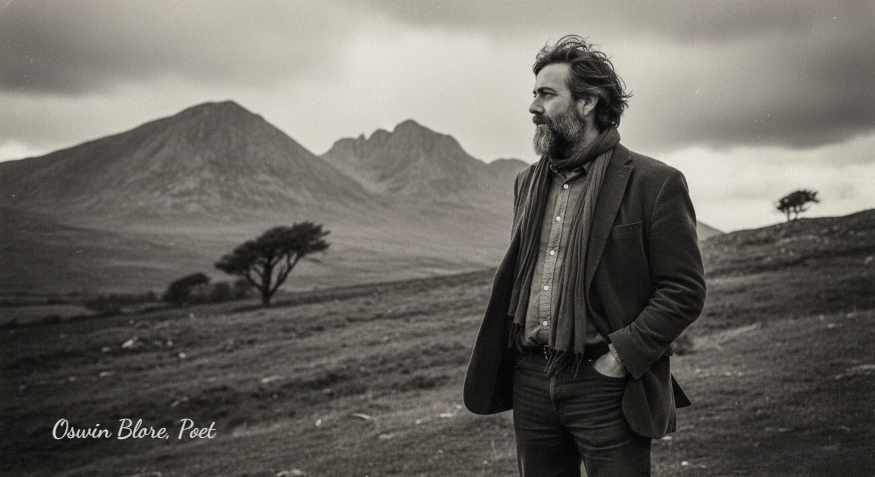
My name is Oswin Blore. I was born at home in the mid 1970’s in a tied cottage 40 miles south of London, in a place called Headley Green. Dad was a farmworker, mum was a housewife. In 1980 we moved north to Tarnleigh. Dad became one of the town’s seven milkmen and we got a council house. Life was good. Mum and dad still live in the same house. I moved out when I married Clara. I was 18.
I now have a bric-à-brac shop called The Resurrectory along Silver Weir Lane in Tarnleigh, not far from the Durham Road cemetery. I stock well-read books, posh porcelain, old clocks, toys, wands, forgotten curiosities, and many other oddities. I’m currently over-stocked. The shelves in my shop sag beneath a legacy of ordinary lives. Some of the stuff has been bequeathed to me by those who now lay hidden in the cemetery. Maybe it’s their way of staying close to the objects they loved, the objects that are now what remains of their lives.
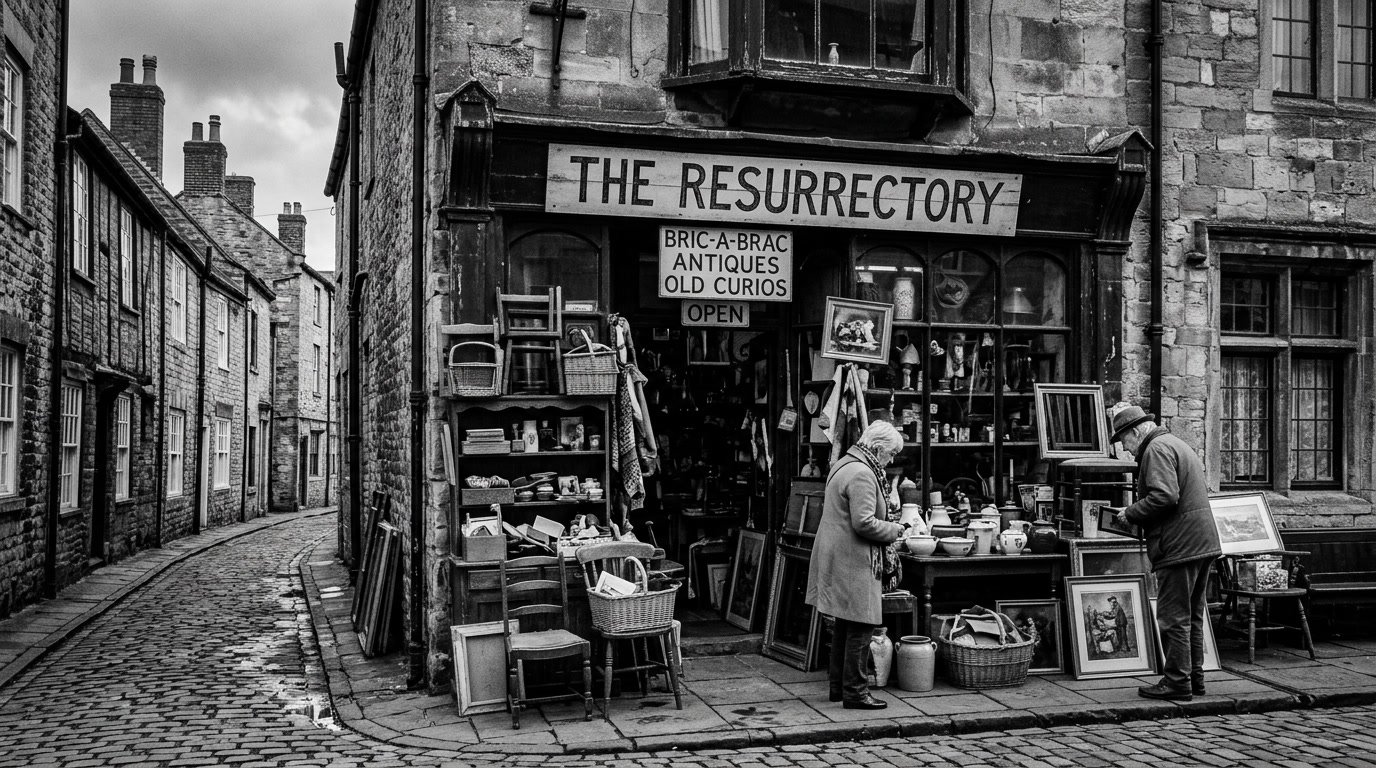
This diary came to me last September. I remember the day clearly. It had started with clouds and light rain. Just before lunchtime, small pools of blue began to appear in the grey skyscape. I was busy waiting for customers. An old man with a long, grey beard, parked his Morris Minor Traveller in front of the shop. I had just started eating my packed lunch – cheese and pickle sandwich, fruit scone with butter and a flask of tea.
The old man came in, looked around and then asked the way to Durham. “That scone looks nice,” he said. I offered him half. He nodded his head as he took the scone from my hand. “It’s all about stuff isn’t it,” he said, just before pushing the entire half-scone into his mouth.
Before leaving the shop, the old man gave me a book. On the well-worn, leather cover the word Palimpsest was engraved. “Here, take this, it’s a diary. Write in it when you can. Whatever you write in it, I’ll be able to read. It’ll keep me up-to-date with what’s going on in your part of the world.” He winked and chuckled. As he was leaving the shop I called out. “What’s your name,” I said, “I need it for the leger.” He waved his hand in the air. “Godfrey,” he laughed. “Godfrey Fisher. My friends call me God.”
After watching Mr Fisher drive away, I opened the Palimpsest. It had been used before – many times. The pages were blank but the indentations of many years of writing could clearly be seen. Someone had erased whatever had been written. Only four words were left. THIS WONDERFUL, PRECIOUS PLACE were written in capitals at the top of the first page.
I spent the entire afternoon thinking about the diary and the old man who gifted it to me. He was in the shop no more than about ten minutes. I’m no stranger to people handing me things and demanding no money. Often they just want the object they’re donating, to be used again.
The next day I was given Lilly Palgriff’s urn, which she still occupied. Her daughter Cheryl said she couldn’t cope with it anymore and asked me to “do something with mum.”
Lilly had always been good to me.
Anyway, I forgot about the diary until the day after Christmas. I woke up with a pen in my hand – a wooden pen that had been given to me years ago by Lilly Palgriff for having looked after her poodle for a week. I think my body was telling me to get on with it.
That afternoon I came across this quote.
So, from today, I begin a new writing adventure in a diary given to me by a man who called himself God. I told Edwina that I’m going to keep a diary and about the old man with the long, grey beard. “It could’ve been God had he been driving a Range Rover or one of those big Mercedes. But an out-of-date Morris Minor seems unlikely,” she said. She gave me some fresh scones and a small pot of homemade blackcurrant jam. “God’s supposed to see everything isn’t he? Why then would he need you to write in a diary?” Edwina answers questions but posing other questions.